Program
Australian Homelessness Conference 2026
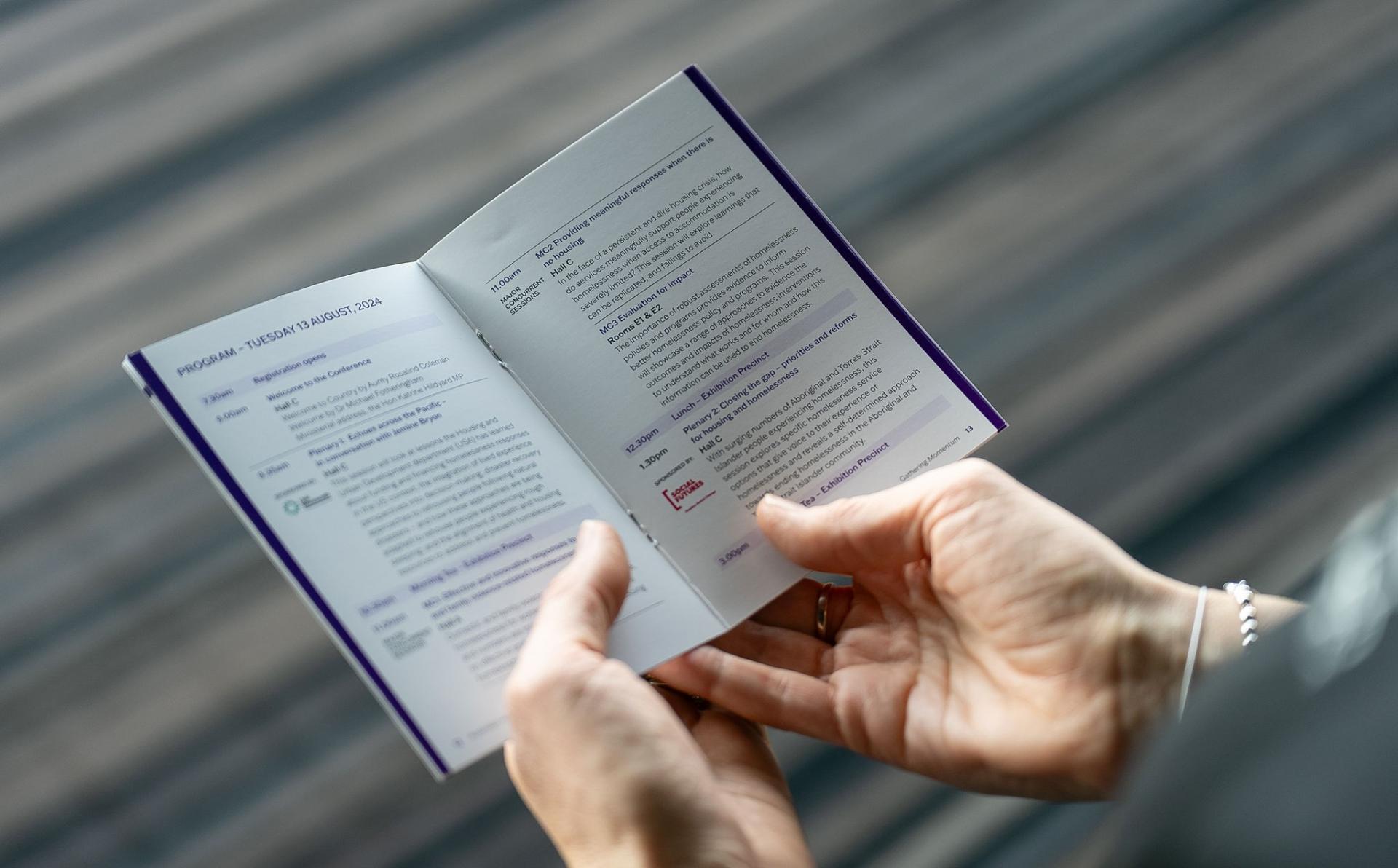
We are delighted to release the program for the Australian Homelessness Conference 2026, being held at the Darwin Convention Centre 7 to 8 October 2026.
This year’s Disrupting the narrative program is packed with case studies and practical examples of leading service responses, as well as discussions focused on system level reform and innovation. The program features a strong focus on addressing homelessness experienced by Aboriginal and Torres Strait Islander people, and on the integration of lived experience perspectives in program and policy design.
We are grateful to the members of the Program Advisory Committee, First Nations Working Group and the Academic and Research Working Group for their advice and assistance in developing the program for this year’s conference.
Please note that the program is subject to change.
Wednesday 7 October 2026
-
9.00am Welcome to Conference
Welcome to Conference includes Welcome to Country.
-
9.30am Plenary 1: Disrupting the Narrative: First Nations Perspectives on Youth Homelessness
Plenary 1: Disrupting the Narrative: First Nations Perspectives on Youth Homelessness
This opening plenary will centre First Nations perspectives on homelessness. Sue-Anne Hunter, National Commissioner for Aboriginal and Torres Strait Islander Children and Young People, will address the growing challenge of youth homelessness nationwide and the critical need to change the trajectory for First Nations young people.
Speakers:
- Sue-Anne Hunter, National Commissioner for Aboriginal and Torres Strait Islander Children and Young People
- Tina Ugle, Noongar Mia Mia
- Leonie Pickett, Noongar Mia Mia
- Alkira Williams and Layla Campbell-Cook, Foyer Foundation
Facilitator: Professor Kerry Arabena, Karabena Consulting Trust
-
10.30am Morning tea
Exhibition Precinct
-
11.00am Concurrent Sessions
Concurrent 1 – Research in academia and in practice: working together for greater impact
Research has too often been done to the sector and to people experiencing homelessness rather than with them. The session recognises that partnerships between academia, the sector and those with lived experience can be challenging on all sides and discusses how to jointly create research and impact that would not have been possible otherwise.Speakers:
- Michael Carmody, Mission Australia
- Professor Robyn Martin, RMIT University
- Professor Stephen Whelan, University of Sydney
- Professor kylie valentine, UNSW
Facilitator: Dr Deb Batterham, Swinburne University of Technology
Concurrent 2 - Zero Excuses: how Australian communities are ending rough sleeping
Sydney, Northern Rivers, and Sunshine Coast share what it actually takes to end rough sleeping: breaking down silos, shared data, health embedded in homelessness responses and lived experience at the table.Speakers:
- Emma Christie, Sunshine Coast & Wide Bay Zero
- Jon Swain, Australian Alliance to End Homelessness
- Sacha Zunic, Northern Rivers Zero, End Street Sleeping Collaboration
Facilitator: David Pearson, Australian Alliance to End Homelessness
Concurrent 3 - Beyond the benchmark: Rethinking how we define severe overcrowding
This session challenges whether a single definition of severe overcrowding captures the diversity of Australian experiences. The panel will explore how overcrowding is lived, measured and responded to — and what a more context-responsive approach could mean for policy and practice.Speakers:
- Violet Kenne, NT Shelter
- Jackson Hills, National Shelter
- Neil Willmett, Aboriginal and Torres Strait Islander Housing Queensland
Facilitator: Shaun Middlebrook, AHURI
Concurrent 4 - From surviving to shaping: unaccompanied children and young people driving system change
When unaccompanied children and young people are given opportunities to shape the systems around them, they transform those systems. Three presentations examine what a better supported accommodation system requires — and what becomes possible when young people are experts, not clients.Speakers:
- Anita McCurdy, Berry Street – Foyer
- Tone Jessup, Greater Shepparton Lighthouse Project
- Associate Professor Catherine Robinson, University Tasmania
- Sam, Lived experience expert, Barnardos
- Lived experience expert Barnados
Facilitator: Gemma Pinnell, Right Lane
Concurrent 5 - Health where it's needed: partnerships bringing care to people experiencing homelessness
When people can't reach the health system, the health system must reach them. This session will showcase what's possible when health, housing, and community organisations stop working in silos and start delivering care together — where people are.Speakers:
- Gemma Hansen, Laynhapuy Homelands Aboriginal Corporation
- Katie Maiolo Commission on Excellence and Innovation in Health
- Jamie Muchall, BHC
- Yananymul Mununggurr, Laynhapuy Homelands Aboriginal Corporation
- Shannon Richardson, Hunter New England & Central Coast Primary Health Network
Facilitator: Rachel Hornsby, AHURI
Concurrent 6 - Safe and housed: women, violence and homelessness
This session explores innovative responses — from meanwhile-use properties and pregnant women's support to keeping women safely in their own homes — that challenge how we prevent and respond to homelessness.Speakers:
- Jocelyn Bignold OAM, McAuley Community Services for Women
- Sue Cripps, Women's Community Shelters
- Dr. Theresa Lynch, Pregnancy and Homelessness Coalition
Facilitator: Helen Waters Silvia, YWCA Australia
-
12.30pm Lunch
Exhibition Precinct
-
1.30pm Concurrent Sessions
Concurrent 7 – Dignity, culture and housing: First Nations perspectives on homelessness
Mainstream responses too often fall short in assisting First Nations people who are experiencing homelessness. This session showcases what works when community leads: Aboriginal-led men's accommodation in regional NSW, culturally safe transitions from prison in Victoria, and closing the dignity gap for First Nations women.Speakers:
- Kristie Burge, Bunmabunmarra Services Australia
- Rochelle Courtenay, Share The Dignity
- Leonie Harris, Aboriginal Housing Victoria
- Codie Schaefer, Aboriginal Housing Victoria
Facilitator: Yvette Park, Yilli Housing
Concurrent 8 - Different lenses, deeper understanding: What do different disciplinary approaches offer?
Australia’s evidence base on homelessness continues to grow and evolve. To date, research has come from a relatively small number of disciplines and there is opportunity for more daring interdisciplinary research. This session showcases the different questions that open up when research applies different lenses to the same problem.Speakers:
- Dr Declan Martin, AHURI
- Shaun Middlebrook, AHURI
- Professor Tim Reddel, The University of Queensland
- Neil Willmett, Aboriginal and Torres Strait Islander Housing Queensland
Facilitator: Dr Nicola Brackertz, AHURI
Concurrent 9 – Built on evidence, led by experience: housing solutions for people with disability
When people with disability lead housing design, and research backs the case for investment, better outcomes follow. This session combines lived experience co-design, striking evidence on the cost of inaction, and a national research agenda driving policy change.Speakers:
- Grant Higham, Queenslanders with Disability Network (QDN)
- Michelle Moss, Queenslanders with Disability Network (QDN)
- Mary Sayers, National Disability Research Partnership
Facilitator: John Engeler, Shelter NSW
Concurrent 10 - The right housing at the right time: reimagining systems for young people
Too many young people are stuck in a cycle of crisis accommodation — not because solutions don't exist, but because systems aren't designed to end youth homelessness. This session shares lived experience leadership, Housing First pilots, and what a genuine continuum of youth housing actually looks like.Speakers:
- Sam Barrett, Melbourne City Mission
- Shai Mikus, Yfoundations
- Shorna Moore, Home Time Campaign
- Ella Te Waka, Home Time Campaign
Facilitator: Kate Colvin, Homelessness Australia
Concurrent 11 - Seen and housed: LGBTQIA+ and gender diverse homelessness
LGBTQIA+ and gender diverse people are disproportionately represented in homelessness yet often invisible in responses. This session explores affirming, inclusive practice that tackles compounding barriers, builds trust, and creates genuine pathways to safe and stable housing.Speakers:
- Tanya Corrie, Juno/ Women's Housing Alliance
- Callum Fearne, Drummond Street
- Bron Firman, Women's Housing Alliance
- Bella-Cate Rose, A Gender Agenda
- Josh Tilley Darvill, Vincent Care Victoria
Facilitator:
- Trish Connolly, Northern Territory Council of Social Service (NTCOSS)
Concurrent 12 - Smart support: AI and digital innovation on the homelessness frontline
AI is arriving in homelessness services whether we're ready or not. This session shares real frontline experience — what works, what doesn't, and what services must get right around ethics, safety and effective implementation before going live with people who are already vulnerable.Speakers:
- Dr James Aloni, Synk.ai
- Lenka Brazda, Wombat Housing Support Services
- Dr Bengianni Halil-Pizzirani, Synk.ai
- Jason Juretic, Stepping Stone House
Facilitator: Trudi Ray, Home Haven Safe
-
3.00pm Afternoon Tea
Exhibition Precinct
-
3.30pm Major Concurrent Sessions
Major Concurrent 1 – System wranglers
It’s always tempting to ‘blame the system.’ In this session we hear from the people in charge of making homelessness systems work. Are sustainable system improvements being made or is meaningful change difficult to achieve? What can people actually make happen within existing silos and budgets?Speakers:
- Mark Cridland, Department of Housing and Public Works (Qld)
- Simon Newport, Homes Victoria
- Rebecca Pinkstone, Homes NSW
- Sandy Pitcher, Department of Human Services (SA)
Facilitator: Karen Walsh, Karen Walsh Consulting
Major Concurrent 2 – Welcome to the Territory
Australia’s Northern Territory is a diverse and unique place. It also has high rates of homelessness, exacerbated by its remoteness, population mobility, and climate-related challenges. This session presents new research and investment that are changing what we know about homelessness in the NT, and what can be done about it.Speakers:
- Anthony Ah Mat, Darwin Indigenous Men's Service
- Kelly Hunter, Department of Children and Families (NT)
- Rachael Uebergang, YWCA Australia (NT)
Facilitator: Annie Taylor, NT Shelter
Major Concurrent 3 - When community leads: First Nations approaches to ending homelessness
When First Nations communities lead, outcomes look different. This session shares practical models from across Australia — breaking the revolving door in the NT, building housing capability in the Pilbara, Youth Foyers, and a First Nations-led wellbeing approach in metropolitan Victoria.Speakers:
- Amanda Drummond, Robe River Kuruma Aboriginal Corporation
- Shane Hamilton, Aboriginal Hostels Limited
- Amber Tapili, Ngwala Willumbong Aboriginal Corporation
Facilitator: Shaun Middlebrook, AHURI
-
5.00pm Official Welcome Reception
Exhibition Precinct
Thursday 8 October
-
7.00am National Salary Packaging Networking Breakfast
Wharf One, Darwin
Sponsored by

-
9.00am Welcome and Plenary 2
Welcome to day two
Address from Josh Burns, Special Envoy for Social Housing and Homelessness
Plenary 2: Big Ideas – Homelessness prevention panel
Most people don't fall into homelessness out of nowhere — they're failed by another system first. In this ABC broadcast session, we bring First Nations leadership, government and research together to ask what it would really take to prevent homelessness, not just respond to it.Speakers:
- Professor Kerry Arabena, Karabena Consulting Trust
- Rebecca Pinkstone, Homes NSW
- Associate Professor Catherine Robinson, University Tasmania
Facilitator: Natasha Mitchell, ABC Radio National
Session Sponsor:

-
10.30am Morning tea
Exhibition precinct
-
11.00am Concurrent sessions
Concurrent 13 – Youth homelessness evidence in practice: Are young people experiencing homelessness ‘hard to reach’?
Young people experiencing homelessness are not a uniform group and can often be ‘invisible’. Support, housing and health systems consistently fail to account for young people’s diversity and needs. This session considers how to move beyond the notion that young people are ‘hard to reach’ and considers successful approaches to creating conditions that allow us to listen and respond to young peoples’ needs.Speakers:
- Shannon Brahim, Mulga
- Dr Bengianni Halil-Pizzirani, Impact Initiative
- Michael Carmody, Mission Australia
- Dr Paul Royce, Mission Australia
- Belinda Tominc, Royal Children's Hospital Melbourne
Facilitator: Dr Declan Martin, AHURI
Concurrent 14 - Health where it's needed: bridging care and homelessness
People experiencing homelessness can't afford to fall through the gap between health and housing. This session showcases what works — assertive outreach, medical respite, GP drop-in models, training future doctors, and national mortality data that makes the case for urgent, integrated action.Speakers:
- Brenton Chivell, South Australia Housing Trust
- Zain Cole, Homeless Healthcare
- Sharyne Jewell, Link Wentworth
- Nikki Schroder, Australian Institute of Health and Welfare (AIHW)
- Zoe Thebaud, Homeless Healthcare
Facilitator: Rachel Hornsby, AHURI
Concurrent 15 - No shelter from the storm: homelessness and disaster response
When floods, heatwaves and extreme weather hit, people without secure housing are most at risk. This session shares hard-won lessons from NSW flood recovery, Victoria's emergency response, and South Australia's Code Red and Code Blue framework — and what works on the ground.Speakers:
- Rocco Esposito, Homes NSW
- Robb Smart, Department of Human Services (SA)
- Mark Stracey, Homes Victoria
Facilitator: Rina Bruinsma, TeamHEALTH
Concurrent 16 - People first: building a workforce that can go the distance
Working in homelessness services is challenging. This session tackles workplace trauma, what Queensland workforce data tells us about retention, cross-sector practice at the housing-MHAOD interface, and why good practice frameworks too often gather dust.Speakers:
- Dr Deb Batterham, Swinburne University
- Fiona Caniglia, Q Shelter
- Stephanie Holmes, Association of Alcohol and Other Drug Agencies NT
- Sophie Parsons, The Salvation Army
Facilitator: Mike Byrne, NT Shelter
Concurrent 17 - From custody to community: rehousing women after prison
Women leave prison into homelessness — not by accident, but by design. This session examines structural barriers, shares NSW reintegration housing outcomes, and makes a bold case for dedicated housing allocation to ensure criminalised women and girls have a place to call home.Speakers:
- Natalie Bradshaw, Legal Aid
- Debbie Kilroy OAM, Sisters Inside
- Jenefer Duffus, Homes NSW
- Tabitha Lean, Sisters Inside
- Marisa Moliterno, Community Restorative Centre
- Rebekah Ross, Community Restorative Centre
Facilitator: Karen Walsh, Karen Walsh Consulting
Concurrent 18 - Beyond the roof: community-led approaches to lasting housing stability
A safe home is just the beginning. This session shares practical, community-led models — from culturally safe Aboriginal tools and Māori identity-based housing to regional co-living innovation and employment as prevention — showing what lasting housing stability looks like on the ground.Speakers:
- Pauline Boscato, St Pat's Community Support Centre
- Tammy Elvin, Fleurieu and Kangaroo Island Junction
- Jordan Robertson, Te Taumata o Ngāti Whakaue and Te Matapihi
Facilitator: Jackson Hills, National Shelter
-
12.30m Lunch
Exhibition precinct
-
1.30pm Concurrent Sessions
Concurrent 19 - Preventing the fall: keeping people housed through rights and reform
This session explores how legal advocacy, systemic reform, and economic evidence can stop people from losing their housing in the first place — addressing provider accountability gaps, renters' rights, and making the case for investment in early intervention over crisis response.Speakers:
- Vee Blackwood, Homelessness NSW
- Natalie Bradshaw, Legal Aid NSW
- Stephanie Price, Social Housing Legal Program
Facilitator: Sharon Collinge, Fair Trading NSW
Concurrent 20 - No wrong door: connecting mental health, AOD and housing on the ground
When mental health and AOD needs go unmet, the revolving door keeps spinning. This session shares practical models that aim to overcome system silos — from harm reduction hubs and integrated AOD treatment in transitional housing, to cross-sector forums building real working relationships between housing and mental health.Speakers:
- Jo McClellan, Two Things
- Grace Oh, St Patrick's Community Support Centre
- Marc Samec, Mental Health Association of Central Australia
- Pip, Mental Health Association of Central Australia
- Maria Woods, Plus Community
Facilitator: Stephanie Holmes, Association of Alcohol and Other Drug Agencies NT
Concurrent 21 - Culturally safe and responsive services
This session will use practical examples to explore how organisations supporting First Nations communities can build culturally supportive practice models. It will share insights from people with lived experience and services that have achieved positive engagement and outcomes.Speakers:
- Professor Kerry Arabena, Karabena Consulting Trust
- Suzanne Naden, Bungree Aboriginal Association
- Codie Schaefer, Aboriginal Housing Victoria
Facilitator:
- Shaun Middlebrook, AHURI
Concurrent 22 - Invisible no more: The case for stable, supported housing
Some of the most vulnerable people cycle through hospitals, prisons, and marginal accommodation, largely invisible to mainstream systems. Drawing on research across health, justice, design, and economics, this session makes an evidence-based case for supported stable housing.Speakers:
- Karen Hunter, Newtown Neighbourhood Centre
- Dr James Miller, University of Auckland
- Professor Olav Nielssen, Macquarie University
- Christiane Poulos, Newtown Neighbourhood Centre
- Dr Stella Stolk, Community Restorative Centre
Facilitator: Dr Nicola Brackertz, AHURI
Concurrent 23 - Beyond crisis: reimagining homelessness systems that actually work
This session examines what homelessness system reform really looks like — from Northern Territory's intake innovation and Perth's cross-agency coordination to questioning whether emergency shelter is still fit for purpose.Speakers:
- Kim Campbell, Homes NSW
- Ewan Higgs, Hobart City Mission
- Katie Vos, Department of Communities (WA)
- Susan Richards, Lutheran Care
- Annie Taylor, NT Shelter
Facilitator: Marion Bennett, Mission Australia
-
3.00pm Afternoon tea
Exhibition Precinct
-
3.30pm Plenary 3: Changing the narrative
Plenary 3: Changing the narrative
Reframing the homelessness policy conversation will mean listening with compassion, allowing real stories of strength, perseverance, and community to shape responses. We reflect on the state of homelessness in Australia, the stories we are telling and what needs to shift.Speakers:
- Dr Tom Alves, AHURI
- Dr Deb Batterham, Swinburne University of Technology
- Kate Colvin, Homelessness Australia
- Neil Willmett, Aboriginal and Torres Strait Islander Housing Queensland
-
5.00pm Conference close
Conference close