Meet the Speakers: The voices reshaping the conversation on First Nations youth homelessness
20 Jul 2026
National Commissioner for Aboriginal and Torres Strait Islander Children and Young People Sue-Anne Hunter will deliver her Australian Homelessness Conference 2026 keynote address at a landmark moment for First Nations children and young people. In July, the National Commission she leads became an official statutory agency — a shift that gives Commissioner Hunter new legislated functions and powers to drive change.
Ahead of the Conference, the Commissioner gave us a preview of what comes next, and what to expect from her keynote and the opening plenary she'll join, titled Disrupting the Narrative: First Nations Perspectives on Youth Homelessness.
Australia’s first Commissioner for Aboriginal and Torres Strait Islander Children and Young People
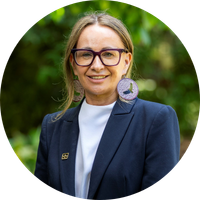
As a proud Wurundjeri and Ngurai Illum Wurrung woman, Commissioner Hunter brings over twenty years’ clinical experience responding to developmental, transgenerational and community trauma.
A child and family services practitioner by trade, she has worked on the youth homelessness frontline, within youth detention facilities, and at the policy table.
From May 2021 to June 2025, she worked as Deputy Chair and Commissioner of the Yoorrook Justice Commission – Victoria's (and Australia’s) first formal truth-telling inquiry into historic and ongoing systemic injustices perpetrated against First Peoples through colonisation. She also led the child protection and health inquiries under Yoorrook, and designed Yoorrook’s Social and Emotional Wellbeing framework to support community coming forward with their truth while limiting re-traumatisation.
Commissioner Hunter helped shape Victoria's Aboriginal guardianship laws, led the Victorian Aboriginal Child and Community Agency’s NUGEL (Aboriginal Guardianship) program and developed a child protection model centred on partnerships between Aboriginal organisations and families.
Her current role sees her transition from state policy to federal, and into a role freshly enshrined in legislation.
“I’ve gone from being able to help mob in Victoria to all over the country,” she says.
“Under the new legislation, I finally have the functions and powers to drive coordination, accountability and improve outcomes for the systemic issues that disproportionately affect Aboriginal and Torres Strait Islander children and young people.”
“This means I can identify and recommend solutions to systemic issues, conduct inquiries and research, report to Parliament, and speak openly about what is, and is not, working.”
In this role, she says she will be visiting and talking with children and young people across the country, as well as running education programs to empower children and young people to exercise and advocate for their rights.
She takes up the role at a time when things are heading in the wrong direction.
“Since I was a social worker, the rates of our First Nations children in out-of-home care compared to non-Indigenous children has soared – yet they only represent 6% of the population of all children in Australia. That is unacceptable. The overrepresentation of young people in custody has also increased,” she says.
Commissioner Hunter says challenges persist today because Australia’s systems are set up to manage risk, rather than invest in the needs of children and families.
“We need to support our families, invest in early intervention and prevention services, and trust that Aboriginal-led solutions work best for our children.”
The Commissioner says a key part of changing the situation, and the way forward, is to make sure children and young people’s rights are maintained, interests are served, and voices are heard.
“I want to empower Aboriginal and Torres Strait Islander children and young people to understand their rights, and it is my role to ensure governments are accountable for their policies and practices that affect our kids’ lives,” Commissioner Hunter says.
The importance of early intervention will feature strongly in her Conference contribution.
“This is particularly important when it comes to keeping families together, and the need for support for the whole family,” she says.
“Understanding the family on an individual level is to understand that they are all part of the solution.”
Attendees will gain insights that can only come from a career spanning from the frontline to the policy table, and may just come away with new perspectives and ideas for tackling the issue of youth homelessness.
“I’ve worked with kids in youth detention, in out-of-home care, sitting with families when children are being removed, in jail cells, with young kids in our hospitals, and in prisons with parents visiting children. You can’t do that work and not be changed,” the Commissioner says.
This opening plenary will centre First Nations perspectives on homelessness. It will focus on the increasing rate of young people experiencing or at risk of homelessness, the transition points where young people are most likely to fall through service gaps, and what practical action can be taken to reduce the number of young people leaving care into homelessness.
Joining Commissioner Hunter as session presenters will be Yvette Park, CEO of Yilli Rreung Aboriginal Housing Corporation, Leonie Pickett, Manager Moorditj Mia Aboriginal Housing First Support Service at Noongar Mia Mia, and Kathy Pickett, Cultural Advisor at Noongar Mia Mia.
Yvette Park
Yvette is an Aboriginal woman of Arrernte heritage with two decades of experience across housing, homelessness and human services.
Her career includes senior leadership roles in government and strategic consulting work focused on housing reform and Aboriginal community controlled services.
She has previously been involved in developing the Northern Territory Homelessness Strategy and supporting the transition of housing management to Aboriginal community control across the NT.
Leonie Pickett
Leonie is a proud Yued, Ballardong Noongar Yok (woman) with a strong connection to Whadjuk Boodja (country) in Western Australia.
She has worked in Aboriginal Community Control over four decades, across Aboriginal Health, Family and Domestic Violence, Mental Health, Native Title, the Community Employment and Development Program (CDEP), and Aboriginal Social and Emotional Wellbeing.
Leonie brings experience and expertise to deliver culturally safe practices within the homelessness and housing sector that develop and promote self-determination, empowerment, and strength in her community.
Kathy Pickett
Kathy Pickett is a proud Noongar woman, mother of three children, and grandmother of eight grandchildren.
With more than 30 years of experience working in Aboriginal community-controlled organisations, she has dedicated her career to supporting the social, emotional, and cultural wellbeing of Aboriginal people.
Kathy holds a Master of Indigenous Therapies from Southern Cross University and completed advanced trauma training in the Harvard University’s refugee program Global Mental Health – Trauma and Recovery.
Currently, Kathy is a research candidate at the Edith Cowan University and works as Aboriginal Cultural Advisor at Yorgum Healing Services.